Barrel Charring: Choosing the Right Heat Profile to Define Spirit Style
News


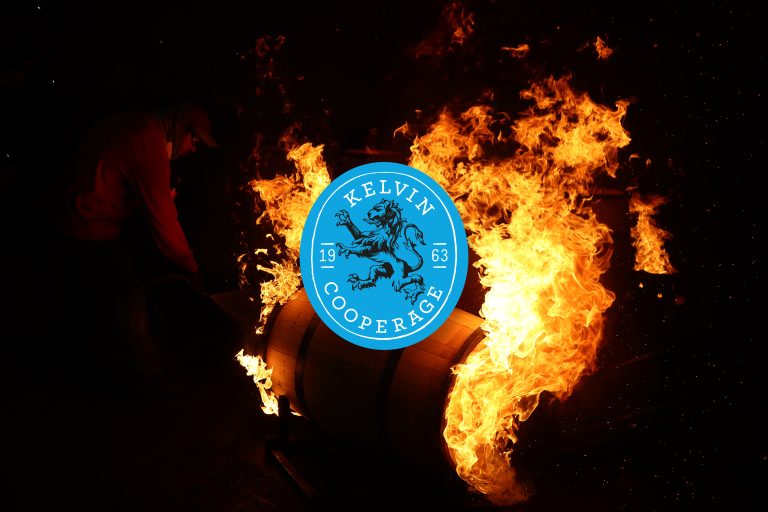
Beyond regulatory requirements, barrel charring is one of the most powerful sensory tools available to distillers. Fire transforms oak into an active partner in flavor creation.
The intensity of charring directly shapes aromatic complexity, texture, filtration capacity and color.
Charring
Toasting
The degree of charring — known as the Char Level — ranges from light (#1) to extremely heavy (#7).
Char #1 – Light (≈15 seconds)
Soft vanilla notes, natural oak character.
Char #2 – Medium-Light (≈30 seconds)
Vanilla, caramel, light toast.
Char #3 – Medium (35–45 seconds)
Caramel, spice, toasted oak, cedar.
Char #4 – Heavy / “Alligator” (55–60 seconds)
Intense vanilla, brown sugar, caramel, smoky notes.
Mandatory for bourbon.
Char #5–7 – Very Heavy to Artisan
Deep smoky aromas, charcoal, coffee, cocoa, robust structure and maximum filtration.
Each level modifies chemical reactions within the wood, influencing the release and transformation of key aromatic molecules.
Charring creates an activated carbon layer that:
Light to moderate charring develops:
Stronger charring produces:
Proper control is essential to balance flavor intensity and food safety standards.
Distilleries select charring intensity based on:
1. Spirit Style
Mild whiskies
→ Char #2–3 for soft oak, balanced vanilla and caramel.
Peated whiskies
→ Char #4+ to reinforce smoky structure.
Bourbon
→ Char #4 required, delivering rich vanilla and brown sugar notes.
2. Aging Duration
Finishing in toasted barrels can add additional aromatic complexity.
The charring profile is both:
It shapes aroma, influences texture, enhances color and defines brand identity.
In premium distilleries, custom heat profiles have become a strategic lever to refine flavor expression and differentiate production batches.
Fire is not merely a step in barrel preparation — it is one of the invisible artisans of flavor.
Piggott, J. R. (2016). Whisky, whiskey and bourbon: Composition and analysis of whisky. In B. Caballero, P. M. Finglas, & F. Toldrá (Eds.), Encyclopedia of Food and Health (pp. 514–518). Academic Press: https://doi.org/10.1016/B978-0-12-384947-2.00780-4
Reazin, G. H. (1981). Chemical mechanisms of whiskey maturation. American Journal of Enology and Viticulture, 32(4), 283–289: https://www.ajevonline.org/content/32/4/283
A transatlantic legacy, from Glasgow to Louisville
Our expertise


Made with love by Cosa