New Barrels
At Kelvin Cooperage we have built a worldwide reputation on the quality of our oak staves, the mastery of our toasting and charring techniques, and our capacity to deliver on the most demanding specifications from distillers pursuing depth and consistency of flavor.
Oak Excellence
At Kelvin Cooperage, excellence begins with the raw material. Our American white oak is sourced exclusively from Graf Brothers, a key company within the OAKING group, ensuring full integration from forest to stave production. This unique partnership guarantees exceptional quality, complete traceability, and consistent oak performance for every barrel.

Species
Quercus alba (American White Oak)
Origin
Sustainably managed forests in the Appalachian region, recognized for producing some of the finest white oak in North America.
Forest Characteristics
The forests where our oak grows are characterized by slow growth at altitude, producing fine and consistent grain, a high phenolic richness that enables optimal flavor extraction, and remarkable batch homogeneity that ensures stable aromatic profiles.
Log Selection
Carefully selected logs with fine, even grain, high phenolic content, and optimal radial yield — ensuring both structural performance and superior flavor contribution.
Complete Tree Utilization
100% of the tree is valued. One hundred percent of the wood is transformed into high-end products, including staves and premium oak flooring, reflecting a responsible and sustainable approach.
Natural Air-Drying
Staves are naturally air-dried for 6 to 36 months to strengthen the wood’s structure, refine tannins, and fully develop their aromatic potential.
This fully integrated process ensures an exclusive, stable, and traceable supply, guaranteeing consistent quality and aromatic profiles.
THE ART OF BARREL MAKING
Crafted in Louisville, Kentucky — in the heart of Bourbon Country — our barrels embody a cooperage tradition honed since 1963, where craftsmanship, oak expertise, and fire mastery converge.

Precision Stave Preparation
Manufactured to strict quality standards, our staves are precisely machined to ensure exceptional consistency in grain orientation, dimensions, and structural integrity.
This meticulous upstream preparation allows us to work from perfectly crafted raw material, creating the ideal foundation for barrel assembly and maturation performance.
Shaping the Barrel
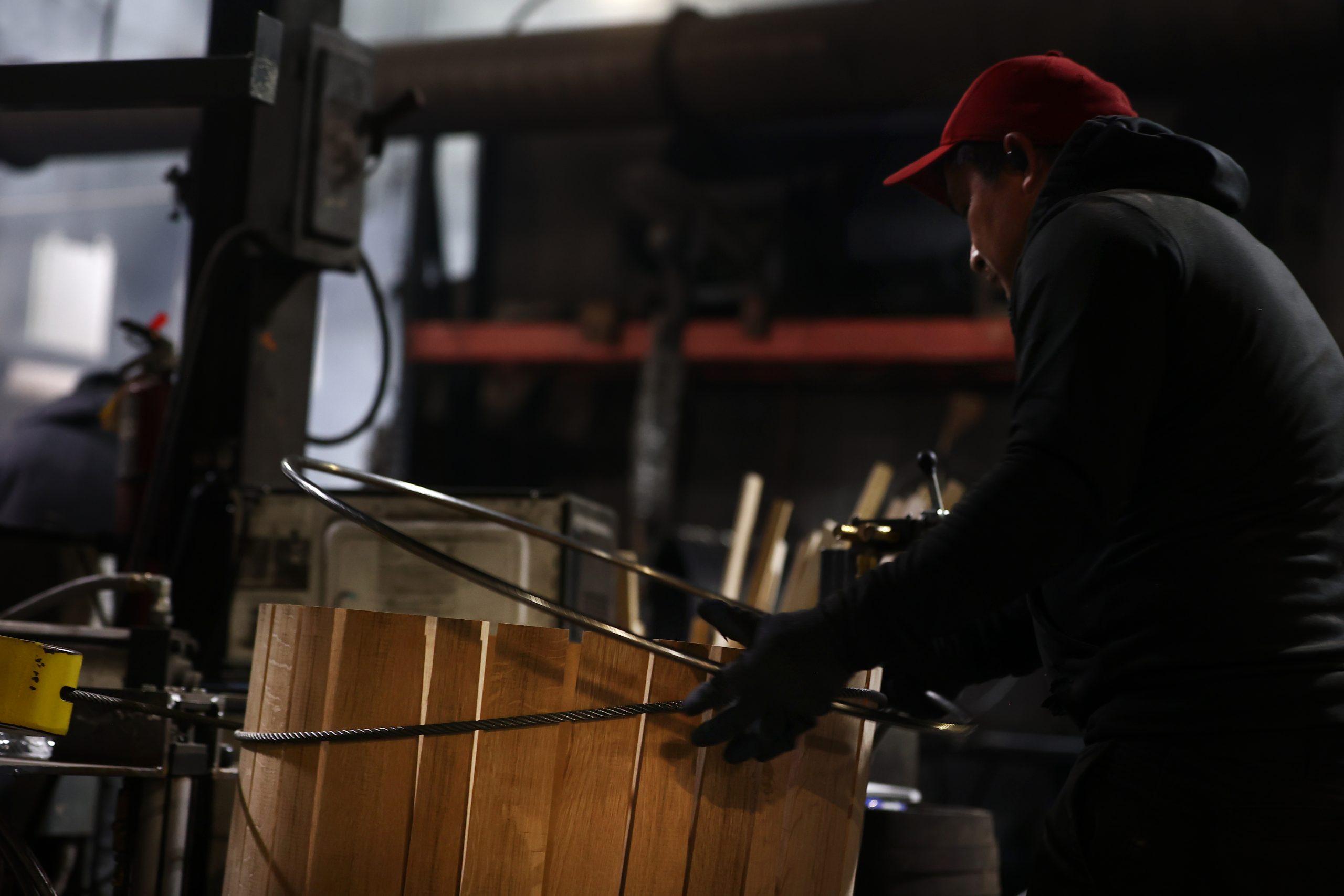
At Kelvin Cooperage, each barrel then takes form through the traditional art of steam-bending. Carefully controlled heat allows the staves to be gradually drawn into shape, respecting the natural structure of the oak while ensuring strength, balance, and long-term structural integrity.
Precision Head Fitting
Once the barrel body is formed, the heads are precisely fitted. Each head is carefully measured and positioned to guarantee a perfect seal and optimal alignment—an essential step in ensuring durability and reliable maturation performance.
Hand Hooping
The final structure is secured through a mechanized hooping process. Hoops are driven into place with controlled, uniform pressure to ensure barrel stability and structural integrity while improving efficiency and preserving cooper safety and comfort.
Through this combination of tradition, precision, and mastery of fire, every barrel we produce reflects the craftsmanship and attention to detail that define our cooperage.


Craft Shaped by Fire
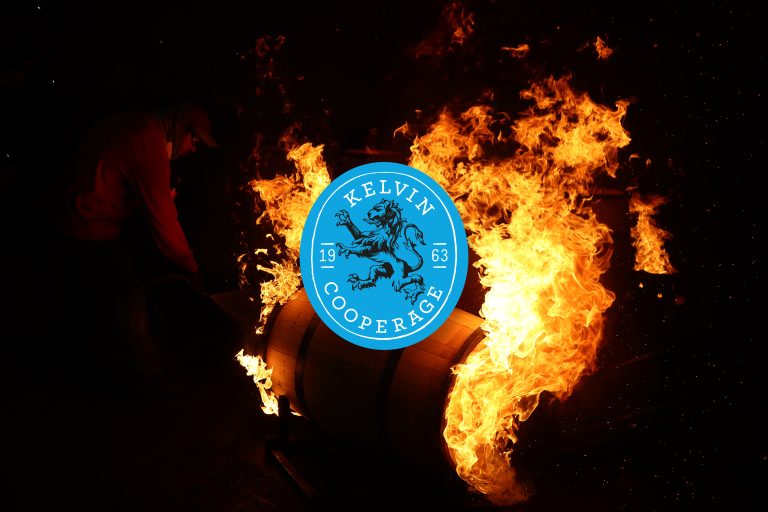
At Kelvin Cooperage, fire is more than a step in the process — it is the defining force behind every barrel we create. Guided by decades of experience, our coopers harness flame with precision and intent, carefully shaping the oak to unlock its full aromatic potential.
TOASTING

Purpose
To gently unlock the oak’s aromatic potential while preserving its natural integrity.
Process
A carefully controlled, gradual application of heat — ranging from several minutes to over an hour — tailored to achieve the desired flavor profile.
Aromatic Effects
- Light toast: fresh oak, malt, butter, herbal notes
- Medium toast: vanilla, toasted sugar, mild spices
- Heavy toast: caramel, butterscotch, almond, marzipan, coffee, light smoke
Toasting is the stage during which the oak is slowly heated prior to charring. This controlled exposure to heat transforms hemicellulose and lignin into the signature aromatic compounds associated with bourbon — including vanillin, caramelized sugars, and oak lactones.
CHARRING

Purpose
Charring involves burning the inner surface of the barrel with open flame. Through controlled flame exposure, charring shapes the spirit in three fundamental ways:
- Creates a filtering charcoal layer that smooths the spirit
- Enhances color and sweetness
- Accentuates vanilla, caramelized, and roasted notes
Standard Levels: Char #1 to Char #4
- #1: Thin layer, more wood expression
- #2: Balanced structure and smoothness
- #3: The bourbon industry standard — rich amber color, vanilla, caramel, and spice aromas
- #4: “Alligator” char — deep intensity, smoky notes, mocha, dark chocolate, smoked bacon
TOASTING AND CHARRING PROFILES

By combining toasting and charring, we master the full sensory spectrum of bourbon — from woody and structured to soft and indulgent.
KELVIN COOPERAGE BARREL FORMATS
Selecting the right barrel format is essential to shaping the character, maturation, and balance of a spirit. We offer a range of carefully crafted barrel sizes designed to meet the diverse needs of distillers, from traditional formats to specialized options. Each barrel is built with the same commitment to quality, precision, and the finest American white oak.

Designed for Every Maturation Strategy
Our new barrels are available in two sizes, 25 and 53 gallons (95 and 200 L), allowing distillers to select the format that best suits their maturation strategy and production needs.
Two Formats, Distinct Maturation Dynamics
The traditional 53-gallon barrel remains the industry standard for bourbon maturation, offering the balance of wood interaction and aging time required for large-scale production and long-term aging programs.
The 25-gallon barrel, with its higher surface-to-volume ratio, allows for faster wood extraction and greater experimentation. It is particularly suited for pilot programs, R&D trials, and limited releases, giving distillers additional flexibility in their maturation strategies.
Optimizing Extraction and Flavor Development
Barrel size directly influences the surface-to-volume ratio, impacting extraction rate, oak interaction, and flavor integration. By offering multiple formats, we enable distillers to fine-tune maturation timelines and achieve the desired aromatic balance.
Through this range of barrel formats, we provide the versatility required to support both innovation and consistency in modern distillation.